
Citrus Commons exemplifies BORDER’s commitment to inclusive, restorative urban landscapes. The project enhances quality of life by increasing access to green space, celebrating local identity, and modeling sustainable infill development in Los Angeles.
Citrus Commons
Sherman Oaks, CA
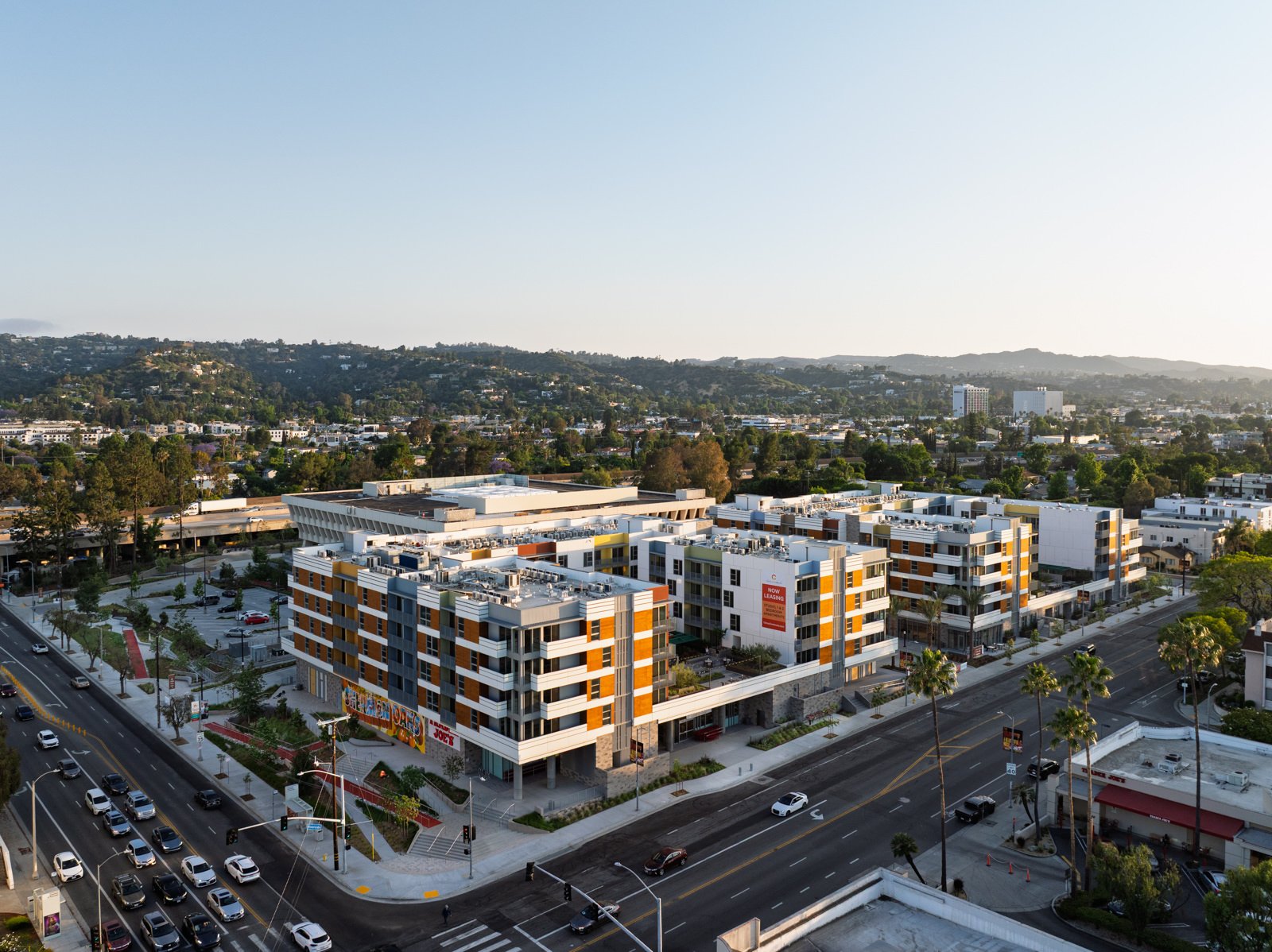
BORDER served as lead landscape architect for Citrus Commons, an 8.5-acre redevelopment of the historic Sunkist Headquarters site in Sherman Oaks, California. Once a symbol of Southern California’s agricultural heritage, the landmark building now anchors a dynamic mixed-use environment that honors the past while embracing a forward-looking vision.
The design repositions the site as a walkable, ecologically attuned destination. BORDER’s context-driven approach—grounded in history, ecology, and user experience—reimagines the landscape to reflect the site's agrarian legacy and proximity to the Los Angeles River. The result is a layered, site-sensitive environment that reconnects the community to its native and cultivated roots.
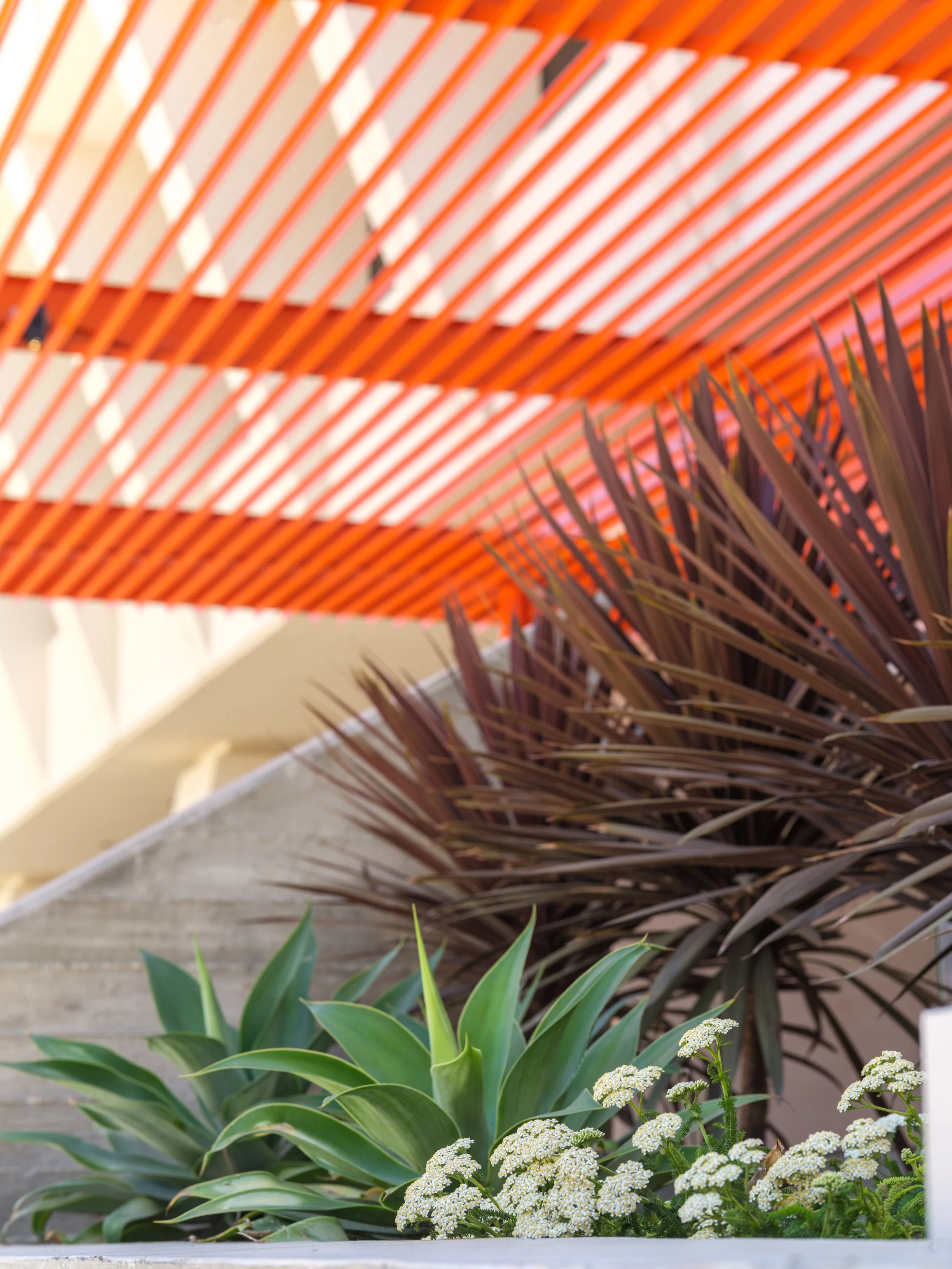
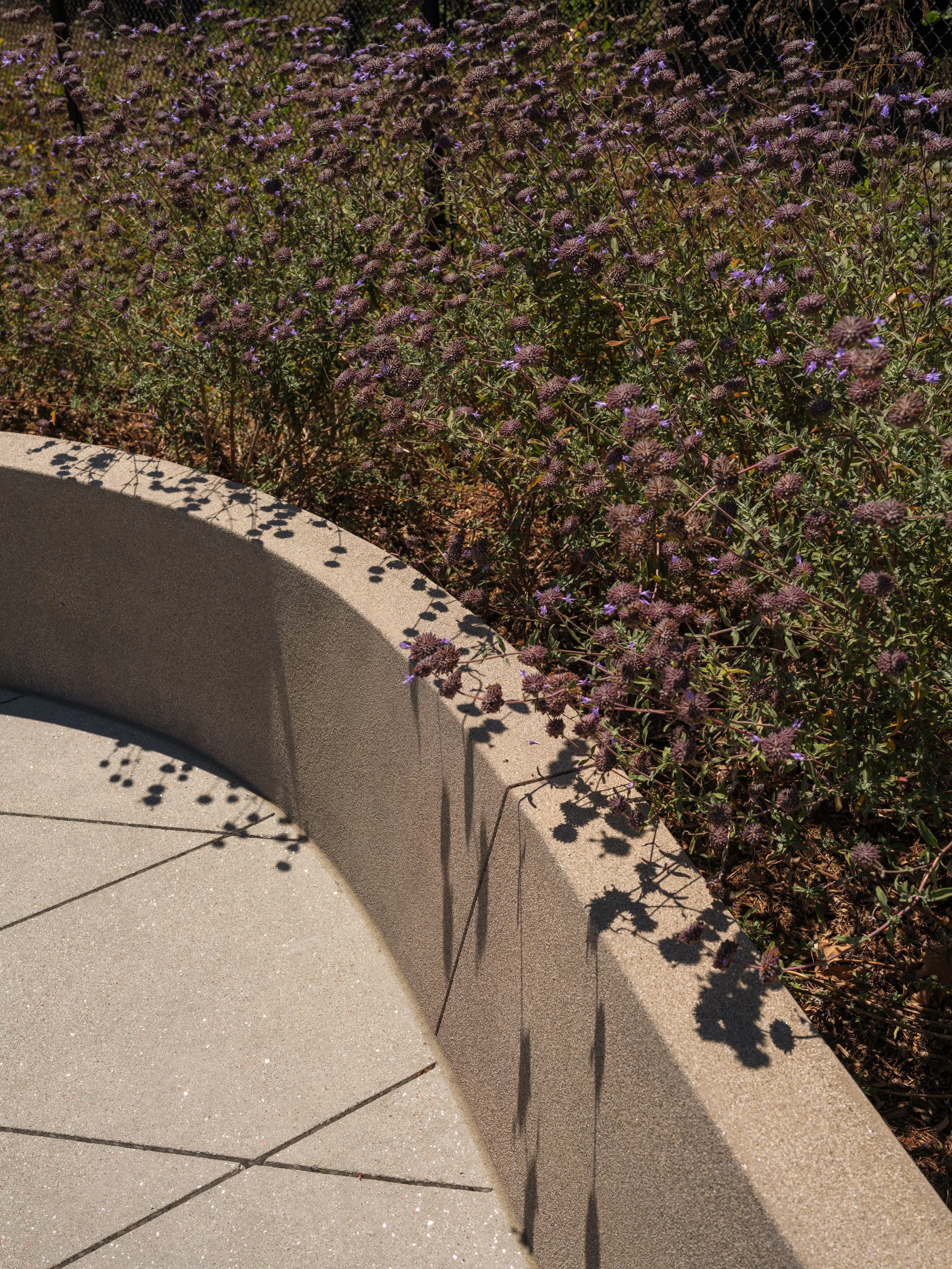
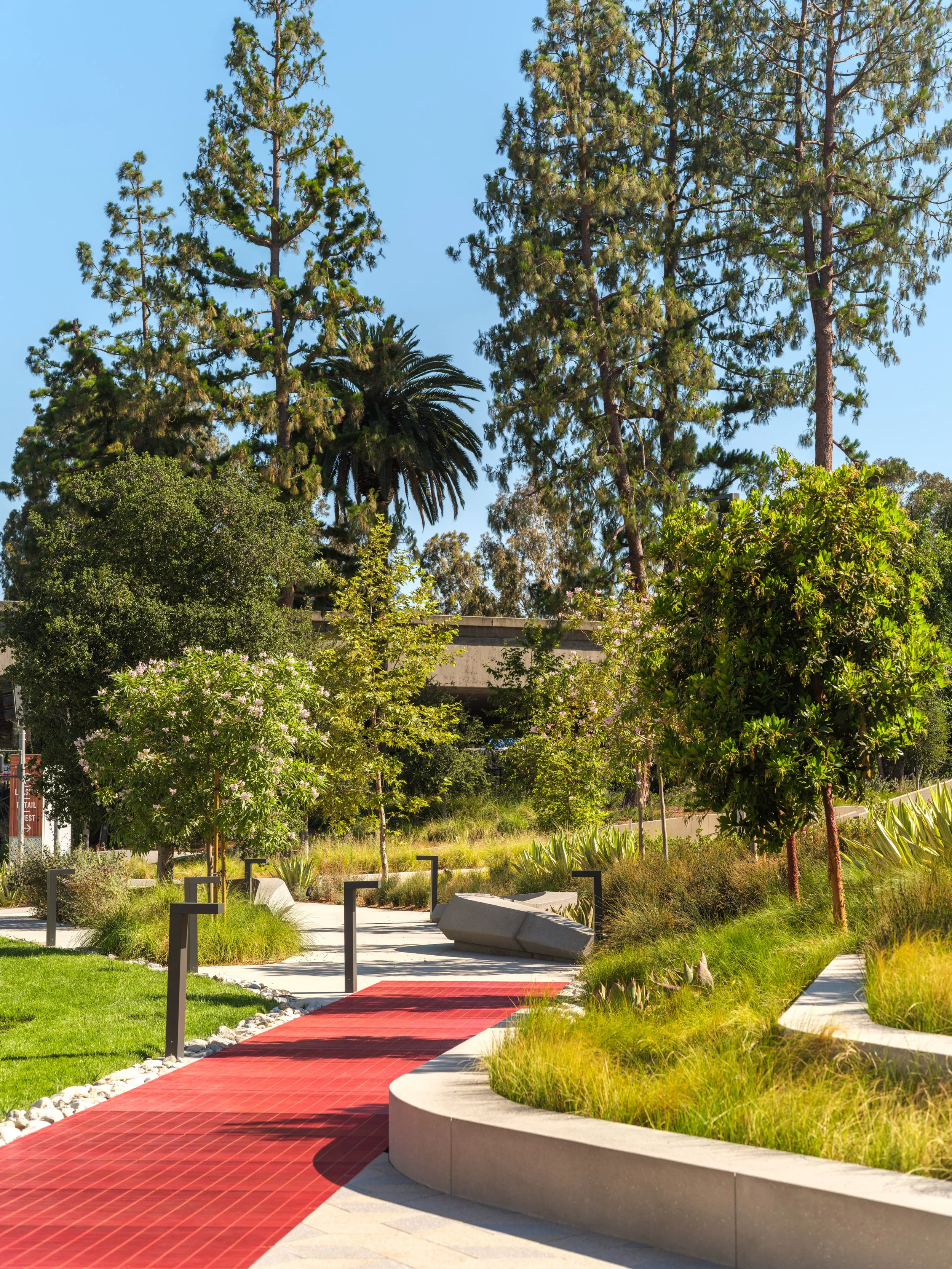
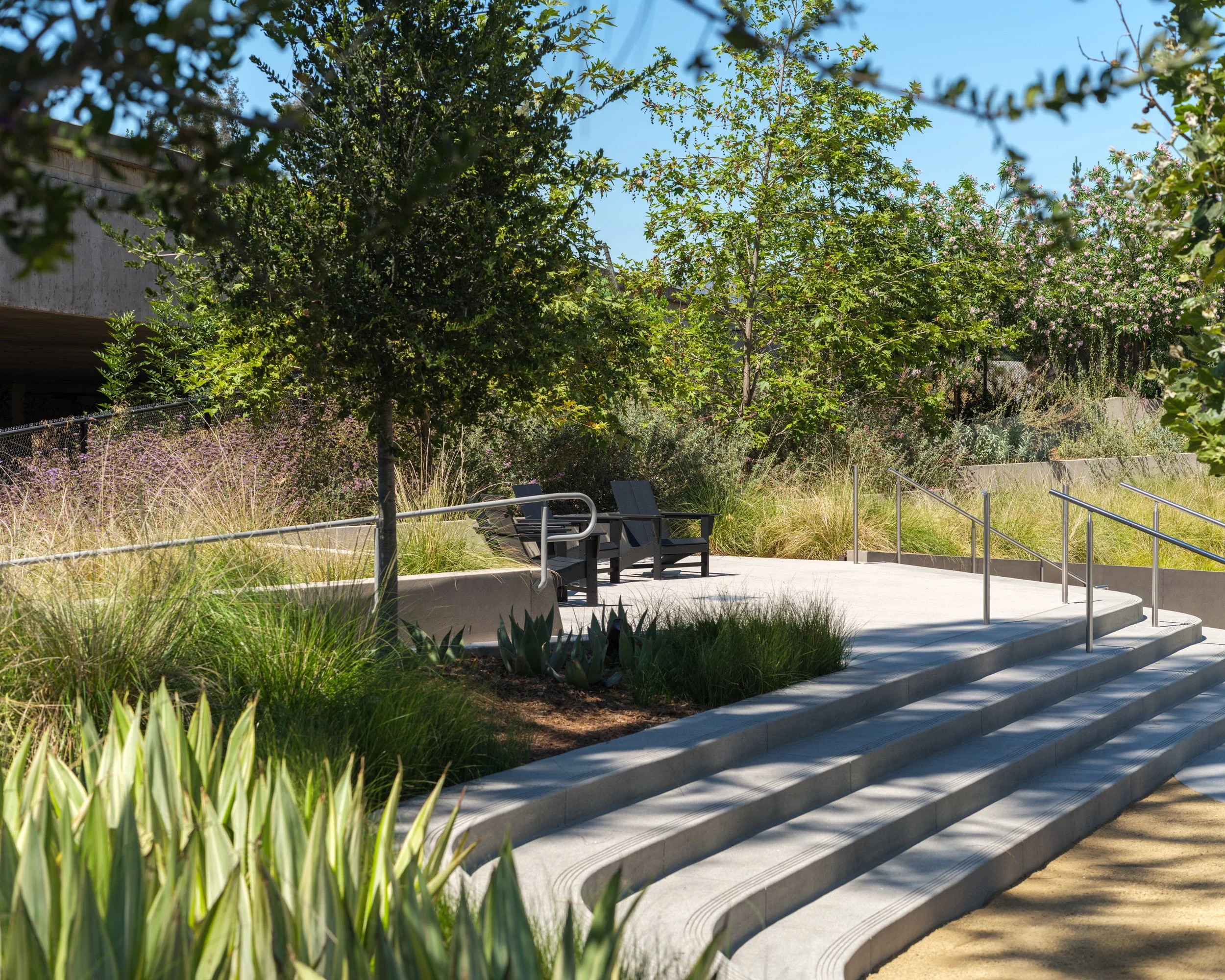
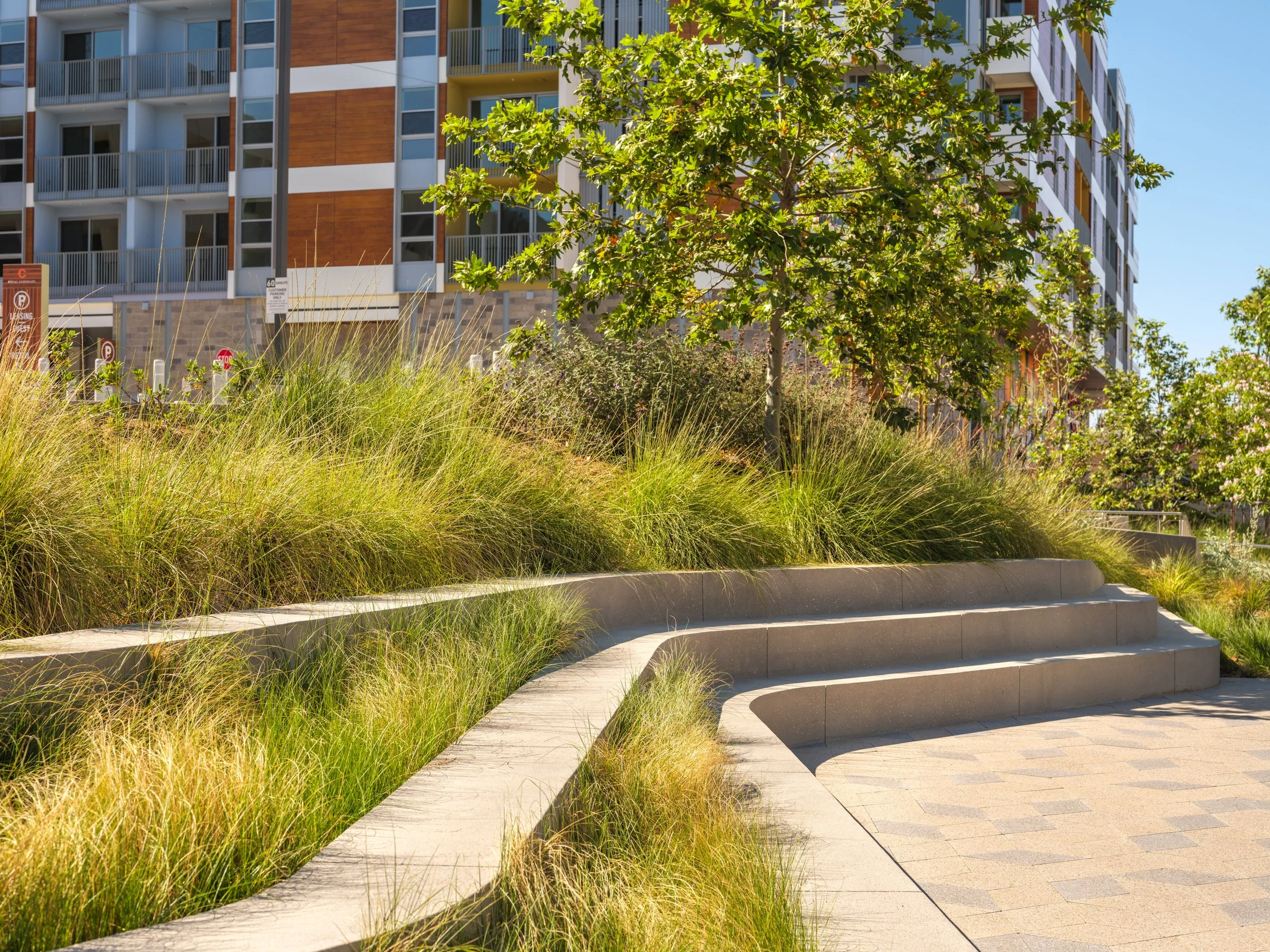
A network of linear parks, bioswales, and green corridors reintroduces the native riparian character of the nearby river. These natural systems are expressed through organic forms that weave through the site. Bold, sculptural elements contrast soft, kinetic native plantings to create a balanced composition of ecology and iconography.
Status
Completed 2025
Size
8.5 Ac
Client
IMT Residential
Project Team
Johnson Fain
KPFF
Selbert Perkins
Location
Sherman Oaks, CA
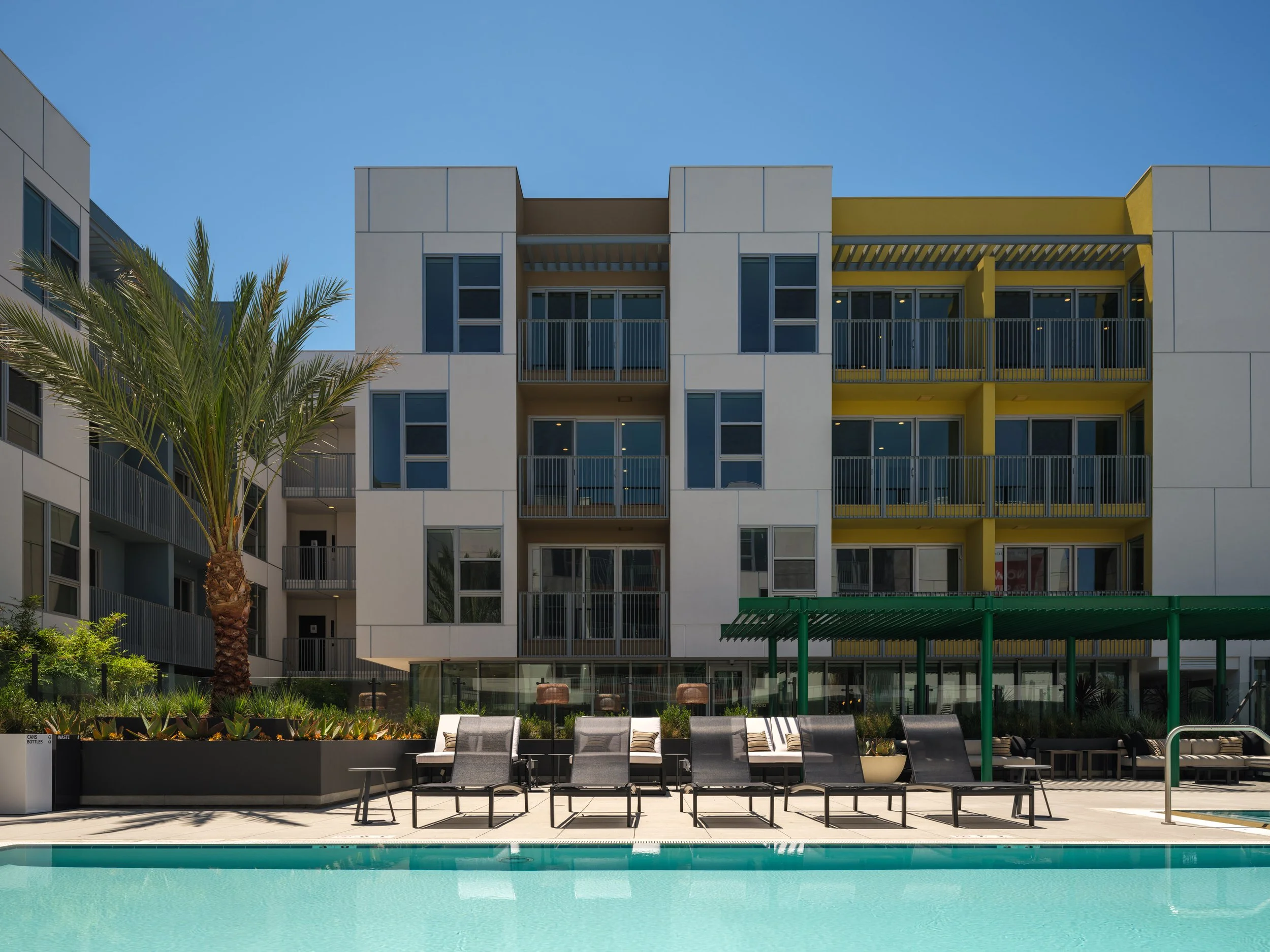
Two new residential buildings feature garden lounges, dining patios, and poolside retreats that extend the indoor life outdoors. Designed for both relaxation and community gathering, the courtyards promote comfort, sensory richness, and a garden-centric lifestyle.
A robust native planting palette—composed of species and materials aligned with the LA River Master Plan—restores ecological function while enhancing biodiversity, stormwater management, and habitat connectivity. Seasonal interest and pollinator support are integral to the layered planting strategy.
Custom furnishings, curated outdoor rooms, and shaded walkways support a range of experiences—from quiet reflection to active gathering. Additional features include native gardens, terraced bioswales, steel bridge walkways, and informal seating areas that invite the community into daily contact with nature.
The southern edge of the site is framed by a multi-functional landscape that bridges the development with the river corridor. This area includes a generous dog park, shaded plaza with café seating, and robust plantings that preserve existing mature pine trees while adding habitat value and seasonal texture.
Citrus Commons serves as a model for context-sensitive redevelopment. Through its integrated landscape framework, the design honors the site’s riparian and agrarian heritage while advancing biodiversity, public access, and long-term resilience.
BORDER reestablished this landmark as a living part of the city—restoring relationships between people, place, and natural systems.
Photography: Michael Wells Photography / BORDER
Next Project